The Wraith are the best monster Stargate ever built
-
The Goa'uld are great television villains. But they are never truly terrifying. They wear human faces, they monologue, they scheme for personal glory, and their cruelty is recognisably human cruelty scaled up with sarcophagus juice and a god complex. When General Hammond, reviewing the Atlantis expedition's first reports, said the Wraith would make the Goa'uld look like amateurs, he was pointing at something real (SGA 1x09, "Home"). The Wraith are something else entirely. They are, I'd argue, the best monster Stargate ever built, and they earn that distinction because they are built wrong in all the right ways.
They Don't Want Power. They Want to Eat You.
The Goa'uld want to be worshipped. The Ori want souls. The Replicators want to replicate. The Wraith want one thing: to feed. Everything about their civilisation, their technology, their social structure, flows from a single biological imperative.
Dr. Carson Beckett laid out the origin in "The Gift" (SGA 1x18): the Ancients, arriving in the Pegasus galaxy, inadvertently seeded a world where an insect species began feeding on the humans evolving there. Over millennia, those insects incorporated human DNA, and the Wraith were the result. They are, at their core, a predator that evolved out of us. Their language is even a derivative of Ancient, as Weir notes in that same episode. We made them. Not deliberately, the way the Ancients made the Replicators, but carelessly, which is somehow worse.
This origin gives the Wraith something most Stargate villains lack: a biological claim on their villainy. They are not evil by choice. The unnamed Wraith prisoner in "Poisoning the Well" (SGA 1x07) says it plainly: "We are a patient race, Major. When we have taken our fill and gathered our strength, we will join force and come for you." No theatrics. No demand for worship. Just the matter-of-fact certainty of a predator explaining that it will, in time, eat you.
The Feeding Mechanic: Intimacy as Horror
The Wraith feeding mechanism is a masterpiece of body-horror design. They do not shoot you. They do not poison you. They press a hand to your chest and drain your life years directly, aging you in seconds. The victim watches their own hands wither. The feeder feels something close to ecstasy.
What makes this work dramatically is the intimacy. It requires physical contact. A Wraith feeding is closer to an embrace than a weapon discharge. That inversion of tenderness into predation gives every Wraith encounter a psychological edge that phaser fire never could.
The show then built on this by revealing that the feeding works in reverse. In "Common Ground" (SGA 3x07), the Wraith who would later be named Todd explicitly articulates his own experience of hunger: "For Wraith, hunger burns like a fire. Tell me, Sheppard, if you found yourself burning alive, would you settle for just one drop of water, or would you take more?" And later, having fed on Sheppard to stay alive under Kolya's captivity, he says: "You pace in your cell, cursing that I took years from you. I stand here cursing that I was not allowed them all. Each in our own way, we suffer." That line is remarkable. The Wraith is not gloating. He is stating a genuine symmetry of suffering. The show earned that line by spending three seasons making the feeding feel real.
The reversal also works literally: a Wraith can give years back, returning life to someone they have aged. This gift, as Todd calls it, is reserved for the most devout worshippers, and for brothers. That one detail spun out an entire secondary culture of Wraith worshippers across the Pegasus galaxy, humans who sacrifice others in exchange for protection.
The Culling Cycle: Terror at Civilisational Scale
The Wraith did not merely threaten individuals. They shaped an entire galaxy's trajectory over ten thousand years.
The mechanics are established in "Underground" (SGA 1x08): the Wraith hibernate between cullings aboard their hive ships for centuries at a time. A small number of Wraith remain awake to guard the sleepers. The cullings are periodic and deliberate. They do not exterminate human populations because a dead food source is no food source. They keep the galaxy at a sustainable harvest level, culling enough to feed but never enough to wipe out the livestock entirely.
The consequences of this system are enormous. Teyla sums it up in "Poisoning the Well": the Wraith will always prevent any race from advancing too far. Every civilization in Pegasus rebuilds after each culling, then gets culled again before it can develop enough to threaten the Wraith. The Genii, introduced in "Underground," had spent generations hiding in bunkers, faking agricultural simplicity, developing nuclear weapons in secret. The Hoffans had spent a hundred and fifty years preserving a single researcher's notes toward a Wraith-resistant drug. Every culture in the galaxy had been shaped by the Wraith the way every prey species is shaped by its predator.
When the Atlantis expedition woke the Wraith early in season one, they did not simply trigger a military crisis. They disrupted an ecological system. The Wraith emerged to find more hives awake than the human population of Pegasus could sustain, which is why the civil war of seasons two through five happened at all: there was not enough food. That detail, established in "Allies" (SGA 2x20) through Michael's explanation that "for the first time since the dawn of our race, there are too few of your kind to feed the waking Wraith," turned the entire conflict from a straight-line invasion into something messier and more interesting.
Queens, Hives, and a Genuinely Alien Hierarchy
Wraith social structure is not just window dressing. It drives plot in ways Goa'uld hierarchy rarely did.
The hive is the basic unit, with a Queen at its centre. Queens are telepathically dominant, able to exert control over Wraith and, in extreme cases, over Teyla. In "Submersion" (SGA 3x18) Teyla describes the Queen she encounters as having "the most powerful mind I have ever encountered." In "The Queen" (SGA 5x08), Todd explains that among all the Queens in a given alliance, one sits above the rest as the Primary, and that "most Wraith seek to be ruled. They fear being without a Queen." This is not just hierarchy; it is a psychological dependency built into the species.
The "Spoils of War" episode (SGA 4x12) revealed that Wraith reproduction can be industrialised through cloning facilities, with a Queen creating a handful of warriors who are then reproduced thousands of times over. The implication is that Wraith armies are not recruited; they are manufactured. This detail sits quietly in the background but makes the scale of the threat comprehensible.
Michael and the Retrovirus: The Ethical Trap
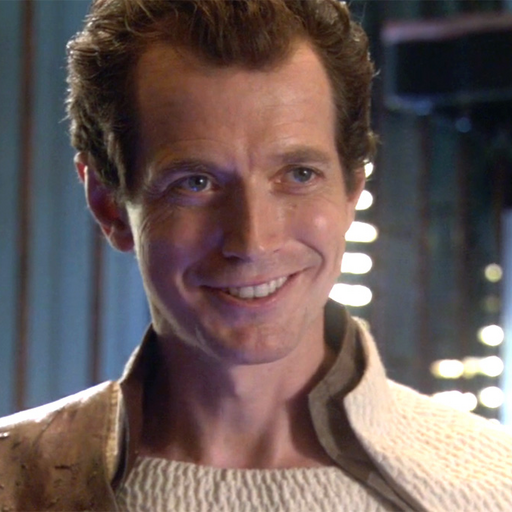
The Wraith's best story arc is the Michael arc, and it works because it turns the heroes into the monsters for a season.
Beckett developed a retrovirus designed to suppress the Iratus bug elements of Wraith DNA, leaving only the human aspects (SGA 2x18, "Michael"). The team tested it on a Wraith prisoner without his knowledge or consent, gave him a false human identity, and watched him slowly figure out what had been done to him. Michael's question, delivered with genuine anger, lands like a punch: "What gives you the right to do this to me?"
Ronon's response, "You know it is. He killed one of your people. Your experiment didn't work. We should kill him right now," is correct by every practical metric. And the show never quite lets the audience feel good about the alternative, either. Michael, restored to Wraith and then cast out by both sides, becomes the arc villain of the later seasons precisely because he was created by Atlantis's own moral overreach. By "The Kindred, Part 1" (SGA 4x18), Michael is engineering a plague, building his own hybrid army, and telling Teyla: "You're a human with Wraith DNA. A hybrid, just like me." He is not wrong. He is the retrovirus argument made flesh.
The arc does something the Goa'uld storylines rarely managed: it makes the threat personal and self-inflicted. The Goa'uld were out there, in the galaxy, doing Goa'uld things. Michael was made in Atlantis's infirmary.
Why They Work: What the Goa'uld Could Not Do
The comparison to the Goa'uld is worth dwelling on. The Goa'uld are intelligent, scheming, politically motivated antagonists. They are comprehensible. You can negotiate with them, manipulate them through their ego, turn their rivalries against them. SG-1 did exactly that for eight seasons.
The Wraith are not comprehensible in that way. Their goals do not admit of negotiation at the civilisational level. You cannot offer them a better deal than eating you; eating you is the deal. The closest thing to a working arrangement with the Wraith is Todd, and every alliance with Todd is built on the shared understanding that it will eventually collapse because Wraith need to feed and humans are food.
Hammond's assessment in "Home" was accurate. The Wraith represent an existential threat with a biological foundation that cannot be reasoned away. That makes them, as villains, cleaner and more durable than anything built on political ambition. Ten thousand years of culling do not leave room for a treaty.
What is your read on the Wraith across the run of Atlantis? I've always thought the show was at its sharpest when it leaned into the scarcity angle, the sense that there simply is not enough human life in Pegasus to sustain what the Wraith need. Does that ecological framing hold up for you, or does the later seasons' Todd diplomacy undercut it?
Sources
- SGA 1x07 "Poisoning the Well"
- SGA 1x08 "Underground"
- SGA 1x09 "Home"
- SGA 1x18 "The Gift"
- SGA 2x18 "Michael"
- SGA 2x20 "Allies"
- SGA 3x04 "Sateda"
- SGA 3x07 "Common Ground"
- SGA 3x18 "Submersion"
- SGA 4x12 "Spoils of War"
- SGA 4x18 "The Kindred, Part 1"
- SGA 5x08 "The Queen"